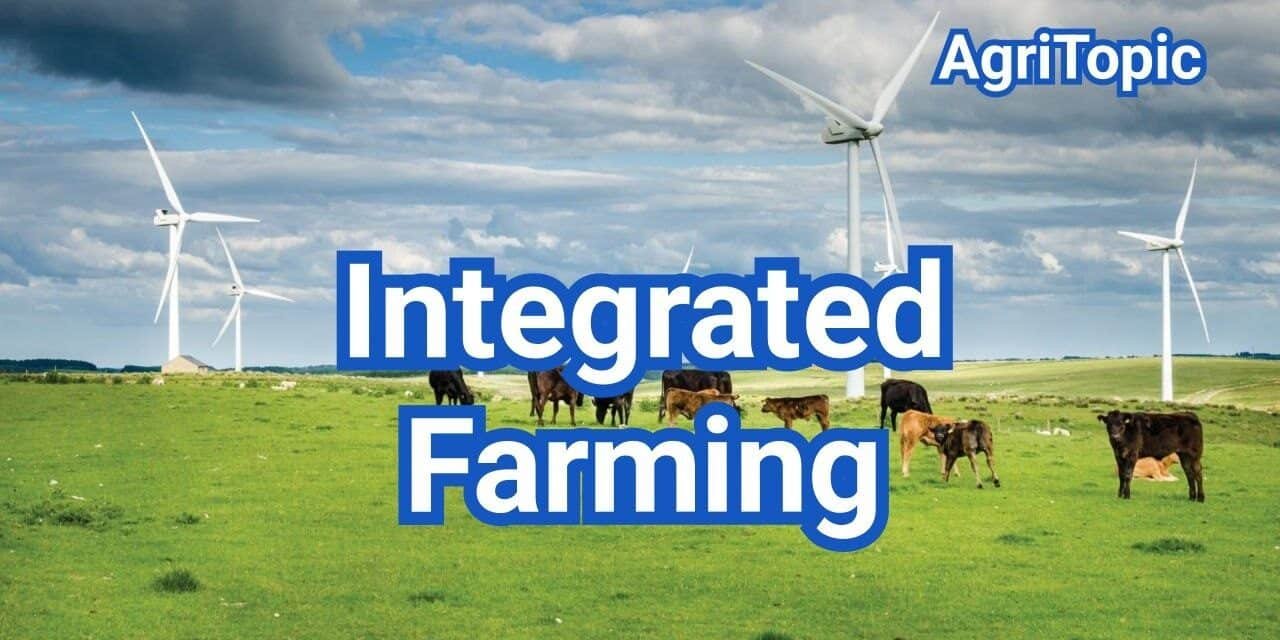
Modern agriculture demands smarter solutions to maintain profitability in a changing economy. Many producers now look toward an integrated farming approach to maximize their land utility and diversify revenue streams. By stacking livestock, crops, and renewable energy, growers create a resilient operation that thrives regardless of market shifts.

Implementing an effective integrated farming system allows for a closed-loop cycle where waste becomes a valuable resource. This strategy reduces overhead costs while increasing total output per acre. Adopting this integrated farming system in usa landscapes helps farmers build a sustainable legacy that supports both the environment and the bottom line.

Quick answer

In practical terms, integrated farming means managing crops, livestock, and sometimes renewable energy as one coordinated business in which by-products from one component become useful inputs for another. A practical U.S. example is cattle grazing a cereal rye cover crop after corn or soybean harvest, returning manure to the field, while solar panels or a manure digester reduce purchased energy or create another revenue stream. The best design is the smallest combination that improves whole-farm profit without creating an unmanageable labor, safety, or capital burden, a principle reflected in the FAO explanation of integrated crop-livestock systems.

Key Takeaways

  • Stacking enterprises creates multiple income streams for better financial stability.
  • Combining livestock and crops improves soil health and reduces fertilizer costs.
  • Renewable energy additions turn underutilized land into a consistent power source.
  • Strategic planning is essential for balancing different agricultural components.
  • Modern models focus on maximizing output while minimizing external resource dependency.

Understanding the Integrated Farming System Definition

The concept of integrated farming represents a sophisticated blend of traditional practices and modern technology. At its core, this approach functions as a whole farm management system that connects various agricultural enterprises to create a self-sustaining cycle. By linking crops, livestock, and energy production, farmers can significantly reduce waste while increasing overall output.

What is integrated farming?

The integrated farming meaning centers on the idea of synergy. Instead of treating crops and animals as separate entities, this method views the farm as a single, interconnected ecosystem. Every output from one component becomes an input for another, which minimizes the need for external resources.

For example, animal manure provides essential nutrients for soil health, which in turn supports robust crop growth. This circular flow is the hallmark of a successful farming system. It transforms potential waste into valuable resources, lowering costs and improving the bottom line for producers.

The evolution of farming systems in the USA

Historically, the integrated farming system in the USA was the standard way of life for many rural families. Before the rise of industrial monoculture, most farms naturally integrated livestock and crops to maintain soil fertility. However, the mid-20th century saw a shift toward specialized, large-scale production models.

Today, we are witnessing a return to these traditional practices, but with a modern twist. Farmers are now using advanced data analytics and renewable energy technology to refine these older methods. This evolution reflects a growing demand for environmental stewardship and long-term economic resilience.

Objectives and characteristics of a modern IFS

A modern integrated farming system definition emphasizes three primary goals: economic profitability, social responsibility, and environmental health. By diversifying production, farmers protect themselves against market volatility and climate-related risks.

Key characteristics of these systems include:

  • Resource Efficiency: Maximizing the use of on-farm byproducts to reduce dependency on synthetic fertilizers.
  • Diversification: Combining multiple income streams, such as crops, livestock, and renewable energy, to stabilize revenue.
  • Sustainability: Implementing biological cycles that restore soil health and protect local water quality.
  • Waste Reduction: Utilizing anaerobic digestion or composting to manage animal waste effectively.

Understanding these core objectives allows producers to design a whole farm management system that fits their specific land and climate. Whether you are managing a small plot or a large operation, the flexibility of these methods makes them a powerful tool for modern agriculture.

Core Principles of Sustainable Integrated Farming

Integrated Farming Systems - man in red shirt and black pants walking on green grass field during daytime

The essence of integrated farming systems lies in the strategic connection between diverse agricultural enterprises. By viewing the farm as a single, living organism, producers can move beyond isolated production methods. This holistic farming approach prioritizes the health of the entire ecosystem over the output of a single crop.

The holistic farming approach

At its core, a sustainable integrated farming system functions by cycling nutrients and resources to minimize waste. Instead of purchasing external inputs, farmers utilize livestock manure to fertilize crops and crop residues to feed animals. This closed-loop cycle is a fundamental pillar of sustainable agriculture.

“The care of the Earth is our most ancient and most worthy and, after all, our most pleasing responsibility.”

— Wendell Berry

By implementing these key components of integrated farming systems, producers reduce their environmental footprint significantly. This method aligns closely with the principles of agroecology and permaculture, where every element serves multiple functions. The result is a more efficient, self-sustaining operation that thrives on internal synergy.

Benefits of diversified farming systems

One of the primary advantages of an integrated farming system is the ability to mitigate financial risk. When a farm relies on various farming activities, a failure in one sector does not lead to total economic collapse. This diversification provides a safety net that is essential for long-term viability.

The following table highlights the core differences between traditional monoculture and an integrated diversified organic farming system:

FeatureTraditional MonocultureIntegrated Farming System
Resource UseLinear/WastefulCircular/Efficient
Risk ManagementHigh (Single Market)Low (Multiple Streams)
Input RelianceHigh (Chemicals)Low (Biological)
Soil HealthDegradingRegenerative

These 3 benefits of integrated farming systems—economic stability, resource efficiency, and soil health—form the foundation of a profitable enterprise. Understanding the integrated farming system (ifs): benefits & how it works allows farmers to transition from fragile models to robust, multi-enterprise businesses.

How integrated farming contributes to climate resilience

Climate resilience is perhaps the most critical outcome of adopting these methods. By building healthy, carbon-rich soil, integrated farms are better equipped to handle extreme weather events like droughts or heavy floods. This adaptability is a hallmark of an integrated farming system for sustainable agriculture.

Reducing reliance on synthetic fertilizers and pesticides further strengthens the farm’s independence. As we look at an integrated farming systems for sustainable agriculture: a comprehensive review, it becomes clear that these practices are not just optional. They are necessary tools for navigating the uncertainties of a changing climate while maintaining high productivity.

Planning Your Integrated Farming System Model

Building a successful integrated farming system model requires a deep understanding of your land’s unique potential. Before breaking ground, you must evaluate the specific needs of your property to ensure long-term viability. This innovative approach relies on careful preparation to balance biological diversity with operational efficiency.

Factors determining the implementation of IFS

Several critical variables dictate how you should structure your land. The factors determining the implementation of IFS include your local soil health, water access, and regional weather patterns. You must also consider your proximity to markets and the availability of labor for daily management tasks.

When learning how to implement IFS on your farm, prioritize these foundational elements:

  • Soil Quality: Test for nutrient density and drainage capacity.
  • Water Availability: Ensure a reliable supply for both irrigation and livestock.
  • Market Demand: Align your production with what your local community actually needs.

Designing a 1-acre integrated farming layout

Achieving high productivity on a small scale is entirely possible with smart design. 1 acre integrated farming requires a modular approach where every square foot serves multiple purposes. By stacking enterprises, you maximize the utility of your space.

Consider these design strategies for your integrated farming in 1 acre project:

  • Zoning: Place high-maintenance crops near your home and grazing areas further out.
  • Vertical Stacking: Use trellises for climbing plants to save ground space.
  • Edge Effects: Utilize the borders of your plots for beneficial insect habitats.

Selecting components for your specific climate

The key components of integrated farming system models vary significantly based on your geography. What works in the humid Southeast may fail in the arid West. Identifying the right component of ifs is essential for reducing stress on your livestock and crops.

To determine what are the components of ifs that fit your region, analyze your local hardiness zone. Building integrated agriculture is most effective when you choose hardy, native-adapted species that require fewer external inputs. By selecting the right mix, you create a self-sustaining cycle that boosts your overall farm profitability.

Implementing Integrated Crop-Livestock Systems

Integrated Farming Systems - group of cows

Implementing a crop-livestock integrated farming system transforms waste into a valuable resource for the entire operation. By creating a closed-loop environment, farmers can significantly reduce their reliance on external inputs while boosting overall yields. This approach mimics natural ecosystems where every output serves as an input for another process.

The synergy between crop production and livestock management

The core of integrated crop-livestock systems lies in the efficient exchange of nutrients. When livestock graze on crop residues, they convert low-value plant matter into high-value protein and manure. This manure then acts as a potent, organic fertilizer for subsequent crop production cycles, enriching the soil structure.

Effective livestock management ensures that animals remain healthy while contributing to the farm’s fertility. By balancing the number of animals with the available land, farmers prevent overgrazing and soil compaction. This balance is essential for maintaining the long-term viability of the farm.

“The integration of animals into cropping systems is not just a method of production; it is a fundamental strategy for building resilient, self-sustaining agricultural landscapes.”

— Sustainable Agriculture Research Institute

Best practices for crop-livestock-integration

To succeed with crop-livestock integration, farmers must follow specific protocols that prioritize both animal welfare and soil health. These common integrated farming practices help streamline operations and maximize profitability:

  • Rotational Grazing: Move livestock frequently between paddocks to allow pastures to recover and prevent parasite buildup.
  • Nutrient Cycling: Use animal waste as compost to feed crops, reducing the need for synthetic fertilizers.
  • Residue Utilization: Allow animals to forage on post-harvest crop residues to minimize waste and provide natural feed.
  • Water Management: Implement systems that capture runoff from livestock areas to irrigate crops safely.

Real-life examples of integrated farming systems

Many successful operations demonstrate how these models work in practice. For instance, the Elnard Integrated Farm serves as a prime integrated farming system example, showcasing how diverse enterprises can thrive together. By combining integrated goat and poultry farming, they create a blueprint for a profitable dual enterprise that minimizes overhead costs.

Other examples of integrated farming system models include integrated chicken and fish farming, where poultry waste provides nutrients for aquatic plants and fish feed. These integrated farming examples prove that diversifying your farm output is a smart financial move. Whether you are managing an integrated broiler farming operation or a complex goat integrated farming system, the goal remains the same: creating a harmonious, productive, and sustainable farm.

Regenerative Grazing and Cover Crop Integration

Regenerative agriculture offers a powerful framework for producers looking to restore their soil while increasing profitability. By shifting focus from extraction to restoration, farmers can create systems that thrive over the long term. This approach relies on working with natural processes rather than fighting against them.

Principles of regenerative agriculture

The core of this movement is the belief that healthy soil is the foundation of all agricultural success. Practitioners prioritize minimizing soil disturbance and keeping the ground covered at all times. By maintaining living roots in the soil year-round, farmers can significantly boost biological activity.

Another key principle involves maximizing crop diversity to break pest cycles and improve nutrient cycling. When these methods are combined with managed animal impact, the land begins to sequester carbon more effectively. This holistic view ensures that the farm functions as a self-sustaining ecosystem.

Managing cover crops and grazing cycles

Successful integration requires careful planning of cover crops and grazing cycles to ensure optimal forage quality. Farmers often plant diverse cover crop mixes that provide both soil protection and high-quality feed for livestock. These plants act as a natural fertilizer, capturing nitrogen and preventing erosion during the off-season.

Strategic movement of animals is essential to prevent overgrazing and allow for adequate plant recovery. By using portable fencing, producers can mimic the natural movement of wild herds. This regenerative grazing technique ensures that plants are grazed at their peak nutritional value while leaving enough residue to protect the soil surface.

Improving soil health management through livestock

Livestock serve as the primary engine for soil health management in a regenerative system. As animals move across the landscape, they deposit manure and urine, which act as natural, nutrient-dense fertilizers. This process reduces the need for synthetic inputs and lowers overall production costs.

The physical impact of hooves also helps incorporate organic matter into the soil profile. This action improves water infiltration, making the land more resilient to both drought and heavy rainfall. By viewing livestock as a tool for land improvement, farmers can build lasting fertility that supports future generations of crops and animals.

Incorporating Agroforestry Practices for Diversification

Integrated Farming Systems - A serene agroforestry landscape showcasing a harmonious blend of diverse trees and crops, with livestock grazing peacefully in the foreground. In the foreground, include healthy, green rows of vegetable crops surrounded by a variety of fruit trees like apple and cherry. The middle ground features a few grazing sheep and chickens, highlighting the integration of livestock. In the background, a thick canopy of tall timber trees offers shade and habitat for wildlife. The scene is bathed in soft, golden sunlight, casting a warm glow on the landscape, emphasizing a sense of tranquility and sustainability. Capture this scene from a slightly elevated angle to provide depth and showcase the interconnectedness of resources. The mood is vibrant and peaceful, embodying the spirit of sustainable farming.

Agroforestry practices represent a strategic shift toward long-term land productivity and ecological balance. By layering woody perennials with traditional crops, producers can create a more resilient and profitable integrated farming system model that thrives over the decades. This approach transforms standard acreage into a multi-functional landscape capable of providing both immediate harvests and long-term environmental services.

Benefits of the agri-silvi-pastoral system

The agri-silvi-pastoral system is a sophisticated method that combines trees, crops, and livestock into one productive unit. This form of agroforestry allows farmers to maximize vertical space while improving soil health through natural nutrient cycling. Livestock provide organic fertilizer for the trees, while the canopy offers shade that reduces heat stress for animals and lowers water evaporation rates.

Beyond production, these systems act as natural windbreaks and erosion control barriers. By diversifying the farm output, producers reduce their financial risk if one specific crop or livestock market faces a downturn. This holistic design ensures that the land remains productive throughout different seasons.

Horticulture-based integrated farming system models

A horticulture based integrated farming system focuses on high-value fruit and nut trees as the primary canopy layer. In warmer regions, a coconut based integrated farming system often serves as the foundation, allowing for shade-tolerant crops like ginger or turmeric to grow underneath. This layering technique optimizes sunlight capture and ensures that every square foot of the farm generates value.

These models are particularly effective for small-to-medium-sized operations looking to increase their profit margins. By integrating high-value horticultural crops, farmers can tap into premium markets while maintaining a stable, long-term asset base. The key is to ensure that the chosen tree species do not compete excessively with the understory crops for water and nutrients.

Selecting tree species for integrated agroforestry

Choosing the right species is critical for a successful integrated agroforestry farming system. Farmers should prioritize native species that are well-adapted to local soil conditions and climate patterns. Selecting trees with deep root systems is essential to avoid competition with shallow-rooted vegetable crops.

Consider the following factors when planning your tree integration:

  • Growth Rate: Fast-growing species provide quicker shade and wind protection.
  • Economic Value: Prioritize trees that offer timber, fruit, nuts, or fodder.
  • Compatibility: Ensure the tree canopy allows sufficient light penetration for the crops below.
  • Maintenance: Select species that require minimal pruning and pest management.

Managing Soil Health and Nutrient Management Plans

Healthy soil serves as the foundation for every successful integrated farming operation. By prioritizing soil health management, producers can improve crop yields while reducing their reliance on synthetic fertilizers. This proactive approach ensures that the land remains productive for future generations.

Developing a comprehensive Nutrient Management Plan (NMP)

A formal nutrient management plan (nmp) acts as a roadmap for balancing crop nutrient needs with available resources. It tracks the application of fertilizers and organic amendments to prevent runoff and nutrient leaching. Effective planning helps farmers optimize their inputs and protect local water quality.

Implementing sustainable soil & water management practices requires regular soil testing and record-keeping. By analyzing nutrient levels, farmers can apply exactly what the crops require. This precision reduces waste and lowers overall operational costs.

Organic manure rules: 90/120 days compliance

Food safety is a critical component of any integrated system. The organic manure rules 90/120 days compliance standards dictate how raw manure must be handled to prevent pathogen contamination. These rules require a waiting period between the application of raw manure and the harvest of crops.

Specifically, farmers must wait 120 days for crops that touch the soil and 90 days for those that do not. Adhering to these guidelines is essential for maintaining certification and consumer trust. Strict compliance ensures that your farm meets federal food safety requirements.

Composting and vermicompost integration

Transforming farm waste into high-quality fertilizer is a hallmark of efficient systems. Many operations now utilize dairy farming with biogas & vermicompost to close the nutrient loop. Composting breaks down organic matter, while vermicomposting uses worms to create nutrient-dense castings.

These methods stabilize nutrients and improve soil structure significantly. Integrating these processes allows farmers to recycle waste products into valuable soil amendments. The following table outlines the benefits of different soil amendment strategies:

Amendment TypeNutrient DensityApplication SpeedPrimary Benefit
Raw ManureHighSlow (Safety Delay)Low Cost
CompostMediumFastSoil Structure
VermicompostVery HighFastMicrobial Health
Synthetic FertilizerHighImmediateRapid Growth

Integrating On-Farm Renewable Energy Solutions

Integrated Farming Systems - A picturesque farm landscape featuring integrated renewable energy solutions, showcasing solar panels and wind turbines harmoniously placed among vibrant crop fields and grazing livestock. In the foreground, a farmer in modest casual clothing inspects solar equipment while standing next to rows of healthy crops. The middle ground highlights modern wind turbines gently spinning, surrounded by lush pastures where cattle are grazing contentedly. In the background, a clear blue sky with a few fluffy clouds enhances the serene, sustainable atmosphere. The lighting is warm and inviting, evoking a sense of hope and innovation. The composition should be captured with a slight aerial perspective to emphasize the scale and integration of these on-farm renewable energy systems.

Integrating renewable energy into your farm layout can significantly boost your long-term financial health. By moving away from total reliance on traditional utility providers, producers can stabilize their operational costs. This shift represents a major step toward building a resilient and future-proof agricultural business.

The role of on-farm renewable energy in profitability

The adoption of on-farm renewable energy is a strategic move for any modern operation. By generating power on-site, farmers can drastically lower their monthly utility bills. This reduction in overhead directly contributes to increased productivity & profitability over the long term.

Beyond simple cost savings, these systems provide a hedge against volatile energy markets. When you produce your own electricity, you gain a predictable cost structure for your business. This financial stability allows for better planning and reinvestment into other farm infrastructure.

Assessing energy needs for livestock and crop processing

Before investing in new technology, you must conduct a thorough audit of your current energy consumption. Start by tracking the power requirements for your livestock ventilation, lighting, and automated feeding systems. You should also account for the energy-intensive demands of crop processing, such as drying, milling, or cold storage.

Accurate data collection is essential for sizing your system correctly. If you underestimate your peak load, your system may fail to meet your operational demands during critical harvest times. Conversely, overestimating can lead to unnecessary capital expenditure that delays your return on investment.

Infrastructure requirements for energy-integrated farms

Transitioning to an energy-integrated model requires careful planning of your physical infrastructure. You must ensure that your site has the necessary space and structural integrity to support solar arrays, wind turbines, or biomass digesters. Proper electrical grid interconnection is also vital for those who wish to sell excess power back to the utility company.

Modernizing your energy usage is a foundational step toward increased productivity & profitability. By investing in robust, scalable infrastructure, you create a system that grows alongside your farm. This commitment to on-farm renewable energy ensures that your operation remains competitive and sustainable for years to come.

Utilizing Anaerobic Digesters and Agrivoltaics

Integrating advanced technology into agricultural operations creates a powerful synergy between production and conservation. By adopting modern hardware, producers can significantly reduce their environmental footprint while simultaneously boosting their bottom line. These tools allow for a more circular approach to resource management on the farm.

How anaerobic digesters on farms convert waste to power

An anaerobic digester on farms serves as a vital component for waste management. These systems break down organic matter, such as manure and crop residues, in an oxygen-free environment. This process produces biogas, which can be converted into electricity or heat for farm operations.

Beyond energy production, the byproduct of this process is a nutrient-rich digestate. Farmers use this material as a high-quality organic fertilizer, effectively closing the nutrient loop. This reduces reliance on synthetic inputs and improves overall soil health.

Agrivoltaics: Sheep grazing under solar arrays

The emerging field of agrivoltaics offers a dual-use solution for land management. By installing solar panels at a height that allows for vegetation growth, farmers can maximize their acreage. Specifically, agrivoltaics sheep grazing has become a popular method to maintain these sites.

Sheep provide natural vegetation control, which eliminates the need for mechanical mowing or chemical herbicides. In return, the solar panels provide shade for the livestock, which can improve animal welfare during hot summer months. This practice optimizes land use for both renewable energy and livestock production.

Tailwater recovery systems for water efficiency

Water scarcity remains a significant challenge for producers in arid regions. Implementing tailwater recovery systems allows farmers to capture and recycle irrigation runoff. This captured water is then stored and reused, which significantly lowers the demand on local aquifers.

These systems are essential for maintaining long-term water security in changing climates. When combined with other high-tech solutions, such as those provided by aeroponics integrated systems inc, farmers can achieve unprecedented levels of resource efficiency. These innovations ensure that every drop of water and every kilowatt of energy is utilized to its fullest potential.

Navigating Regulatory Compliance and Food Safety

Integrated Farming Systems - horses on green grass field during daytime

Managing an integrated farming cluster requires a deep understanding of federal safety standards to ensure long-term viability. As operations grow more complex, the intersection of livestock and crop production demands strict adherence to safety protocols. Proactive compliance not only protects your business from legal risks but also builds lasting trust with your customers.

Understanding the Produce Safety Rule (BSAAO)

The produce safety rule bsaao, which stands for Biological Soil Amendments of Animal Origin, is a critical regulation for farms using manure. This rule dictates how farmers must treat and apply animal waste to fields where produce is grown. It aims to minimize the risk of human pathogens like Salmonella or E. coli entering the food supply.

Farmers must carefully monitor the application intervals between manure use and harvest. Following these guidelines is essential for any example of integrated organic farming that utilizes on-farm livestock waste. Failure to comply with these specific timeframes can lead to significant safety violations and potential product recalls.

Record-keeping for integrated farming clusters

Rigorous documentation serves as the backbone of a successful integrated farming cluster. You must maintain detailed logs of all soil amendment applications, water quality testing, and worker training sessions. These records provide the necessary evidence to prove that your farm meets federal safety benchmarks during an inspection.

Digital management tools can simplify this process by centralizing your data in one secure location. Consistent record-keeping ensures that every part of your operation remains transparent and accountable. Reliable data is your best defense when demonstrating compliance to regulatory agencies.

Ensuring compliance with organic and conventional standards

Balancing the requirements of organic farming with conventional safety standards can be challenging but is entirely achievable. While organic certification focuses on input restrictions, the Produce Safety Rule (BSAAO) focuses on biological risk mitigation. You must ensure that your nutrient management plans satisfy both the USDA organic standards and the FDA food safety requirements.

Compliance AreaOrganic StandardSafety Rule (BSAAO)Primary Goal
Manure UsageStrictly CompostedTime-Interval BasedPathogen Control
Record KeepingInput LogsApplication RecordsTraceability
Water QualityMinimal ContaminationMicrobial TestingPublic Health

By integrating these practices, you create a robust framework that supports both environmental health and consumer safety. Staying informed about evolving regulations allows you to adapt your methods without compromising your farm’s productivity. Consistent compliance is the ultimate key to scaling your agricultural enterprise successfully.

Leveraging Federal Programs for Financial Support

Many farmers find that the path to long-term profitability is paved with federal assistance programs designed for land stewardship. These initiatives provide the necessary capital to transition toward sustainable agriculture while reducing the financial burden on individual producers. By utilizing these resources, you can implement complex systems that benefit both your bottom line and the environment.

Conservation Stewardship Program (CSP) explained

The Conservation Stewardship Program (CSP) is a unique federal initiative that rewards farmers for their existing conservation efforts. Unlike other programs that focus on single projects, this program looks at your entire operation. It encourages you to take your land management to the next level by adopting advanced practices.

Participants receive annual payments for maintaining high standards of environmental care. This support helps cover the costs of ongoing management, such as soil health monitoring and wildlife habitat preservation. It is an excellent way to ensure that your sustainable agriculture goals remain financially viable over the long term.

Environmental Quality Incentives Program (EQIP) for IFS

The Environmental Quality Incentives Program (EQIP) provides direct financial and technical assistance to help you install conservation infrastructure. For those managing integrated systems, this program is particularly useful for funding projects like waste storage facilities or irrigation improvements. It helps mitigate the high upfront costs associated with building a modern, efficient farm.

By applying for this program, you can secure cost-share funding for specific resource management improvements. This might include fencing for rotational grazing or the installation of renewable energy components. These upgrades are essential for creating a robust and productive farm environment.

Applying for grants and technical assistance

Navigating the application process requires careful planning and documentation of your farm’s current needs. You should start by contacting your local USDA Service Center to discuss your specific goals. They provide technical assistance to help you identify which programs best fit your unique operational model.

Preparation is key to securing these grants. Ensure your records are organized and that you have a clear plan for how the funds will improve your land. The following table outlines the primary differences between these two major federal support options.

Program NamePrimary FocusFinancial StructureBest For
CSPWhole-farm stewardshipAnnual paymentsAdvanced conservationists
EQIPInfrastructure upgradesCost-share fundingNew system implementation
Technical AssistancePlanning and designExpert consultationAll farm sizes

Optimizing Resource Utilization and Waste Cycles

Integrated agriculture farming thrives when waste streams are transformed into valuable inputs. By viewing the farm as a single, interconnected organism, producers can achieve better resource utilization that traditional models often overlook. This holistic strategy ensures that every byproduct serves a purpose, turning potential liabilities into profitable assets.

Crop-livestock-fishery integration techniques

The most effective way to manage farm resources is through crop-livestock-fishery integration. In this model, livestock manure provides essential nutrients for crop production, while crop residues serve as feed for animals or substrate for fish ponds. The nutrient-rich water from fish tanks can then be cycled back to irrigate crops, creating a self-sustaining loop.

This method requires careful planning to ensure that the scale of each component matches the others. When balanced correctly, the system minimizes waste and maximizes the output of high-quality protein and produce. Farmers often find that this agricultural approach to increase overall productivity and sustainability of IFS leads to a more resilient bottom line.

Closed-loop systems for maximum efficiency

Implementing integrated agricultural systems allows for a level of agriculture vertical integration that is rarely seen in conventional operations. By capturing energy and nutrients within the farm gate, you reduce the need for external inputs like synthetic fertilizers or expensive feed. This creates a stable environment where the farm can thrive even during market fluctuations.

  • Nutrient Cycling: Using animal waste to fertilize crops reduces reliance on chemical inputs.
  • Water Conservation: Recirculating pond water for irrigation saves significant water resources.
  • Energy Recovery: Converting organic waste into biogas provides power for farm operations.

Reducing chemical dependency through biological cycles

A primary goal of integrated agro farming is the significant reduced chemical dependency achieved through natural biological processes. By fostering a diverse ecosystem, farmers encourage beneficial insects and soil microbes that naturally suppress pests and diseases. This shift away from synthetic chemicals not only lowers costs but also improves the long-term health of the soil.

Healthy soil acts as a foundation for the entire farm, supporting robust plant growth and resilient livestock. When you prioritize biological cycles, you are investing in the future of your land. This transition requires patience, but the result is a cleaner, more profitable, and environmentally conscious operation that stands the test of time.

Integrated Pest Management and Biological Controls

Integrated Farming Systems - A lush, vibrant agricultural landscape showcasing integrated pest management practices. In the foreground, a diverse range of crops, including leafy greens and flowering herbs, with a farmer in professional attire examining plants for pests. In the middle ground, a variety of beneficial insects like ladybugs and bees actively managing pest populations, enhancing biodiversity. Background elements include a solar energy farm to signify energy integration, alongside pastures with livestock grazing, creating a harmonious ecosystem. Soft, natural sunlight illuminates the scene, casting gentle shadows and highlighting the colors of the plants and insects. The atmosphere is tranquil yet optimistic, embodying the synergy of nature and science in sustainable farming.

Biologically integrated farming systems offer a sustainable path forward for producers looking to minimize synthetic inputs. By shifting the focus from reactive chemical spraying to proactive ecosystem management, farmers can create a more resilient landscape. This approach ensures that your farm remains productive while maintaining long-term environmental health.

Implementing Integrated Pest Management (IPM)

Integrated pest management (ipm) is a science-based strategy that prioritizes the use of biological, cultural, and physical tools. Instead of relying solely on pesticides, this method targets the root causes of pest outbreaks. Farmers monitor fields regularly to identify thresholds where intervention becomes necessary, ensuring that chemical use remains a last resort.

Effective implementation involves rotating crops to break pest life cycles and using physical barriers like row covers. These proactive measures significantly reduce the pressure on your crops. By integrating these techniques, you build a farm that naturally resists common threats.

Using livestock for natural pest suppression

Livestock play a vital role in managing pest populations within orchards and pastures. When managed correctly, animals like sheep or poultry act as natural sanitizers by consuming fallen fruit, weeds, and larvae that harbor pests. This reduces the need for manual labor and synthetic treatments.

In orchard settings, grazing animals help keep the understory clean, which limits the habitat for harmful insects. This synergy between livestock and crops is a hallmark of successful biologically integrated farming systems. It turns a potential waste management issue into a powerful tool for pest control.

Biological controls in diversified organic farming

Diversified farms thrive when beneficial insects and predators are encouraged to inhabit the landscape. By planting native flowers and maintaining hedgerows, you provide a sanctuary for ladybugs, lacewings, and parasitic wasps. These natural allies hunt common crop pests, keeping populations in check without human intervention.

Focusing on these natural solutions allows you to protect your harvest while fostering a balanced environment. Integrated pest management (ipm) serves as the foundation for this success, ensuring that every action supports the broader farm ecosystem. Embracing these biological controls leads to healthier soil, stronger plants, and more consistent yields over time.

Scaling Your Integrated Farming Business

Building a successful integrated farming business is about more than just adding new crops; it is about creating a resilient ecosystem. As you move beyond basic production, you must view your land as a series of interconnected cycles. This shift allows you to maximize output while minimizing external inputs.

Transitioning from traditional practices to IFS

Moving from a single-crop operation to an integrated farming system model requires a phased approach. You should start by identifying which livestock or secondary crops complement your existing infrastructure. This prevents overwhelming your current labor force while testing new revenue streams.

Many producers find success by reviewing the integrated farming system: 9 models to see which fits their specific acreage. By starting small, you can refine your management techniques before scaling up. This careful transition ensures that your soil health and animal welfare remain top priorities during the expansion.

Marketing products from an integrated farm

Transparency is the most powerful tool in your marketing arsenal. When you discover the world’s best integrated farm: a comprehensive guide to modern agriculture and the integrated farming system (ifs), you will notice that storytelling drives sales. Customers want to know how their food is raised and how your farm supports the local environment.

Use social media and farm-to-table events to share your journey. Highlighting the 5 thoughts on “integrated farming system: 9 models, objectives & advantages” can help educate your community on why your products are superior. Building this connection creates a loyal customer base that values quality over the lowest price.

Economic advantages of the integrated farming system

Diversification is the primary driver of financial stability in an integrated farming system. By spreading your risk across multiple enterprises, you protect your bottom line from market volatility. If one crop fails or livestock prices dip, other sectors of your farm can sustain your cash flow.

The following table illustrates how an integrated approach compares to traditional monoculture operations in terms of long-term viability:

FeatureTraditional FarmingIntegrated Farming
Revenue StreamsSingle SourceMultiple Sources
Input CostsHigh (Chemicals/Fertilizer)Low (Internal Recycling)
Risk LevelHigh (Market Dependent)Low (Diversified)
Soil HealthDegrading Over TimeImproving Annually

Ultimately, adopting an integrated farming system model allows you to build a legacy. By focusing on efficiency and smart growth, you ensure your operation remains competitive for years to come. This strategic planning is the key to turning a farm into a thriving, multi-generational business.

Overcoming Challenges in Integrated Farming

Integrated Farming Systems - green tractor on brown grass field under blue sky during daytime

Transitioning to an integrated farming system requires careful navigation of unique operational hurdles. While the potential for profit is high, producers must prepare for the steep learning curve associated with managing multiple enterprises simultaneously. Understanding these obstacles is the first step toward building a resilient agricultural business.

Common barriers to entry for new farmers

New farmers often encounter significant financial and knowledge-based barriers when starting a complex farming system. High initial capital requirements for infrastructure, such as fencing for livestock or irrigation for crops, can be daunting. Furthermore, the lack of specialized training in managing diverse biological cycles often leads to early mistakes.

Many beginners struggle with the limitations of integrated farming system models because they attempt to scale too quickly. It is vital to start small and focus on mastering one or two core components before adding more layers. Seeking mentorship from experienced producers who have successfully implemented these systems can provide invaluable guidance.

Solutions to technical and labor challenges

Labor management remains one of the primary disadvantages of IFS, as diverse operations require constant attention. To address this, many farmers turn to automation and simplified scheduling tools. Implementing smart technology for monitoring soil moisture or livestock health can significantly reduce the manual labor burden.

Proactive solutions to overcome challenges often involve phased implementation strategies. By slowly integrating new components, farmers can refine their technical skills without overwhelming their existing workforce. This approach ensures that each new enterprise is profitable and sustainable before moving on to the next phase of development.

Managing the complexity of multi-enterprise farms

The challenges of integrated farming system management often stem from the need to coordinate disparate tasks. Successful operators utilize detailed record-keeping systems to track nutrient flows and labor hours across the entire farm. This data-driven approach helps identify bottlenecks and improves overall efficiency.

Effective management requires a holistic view of the farm as a single, interconnected organism. When one part of the system fails, it often impacts others, making clear communication and contingency planning essential. By treating the farm as a cohesive unit, producers can turn potential chaos into a streamlined, productive operation.

Challenge CategoryPrimary ObstacleStrategic Solution
FinancialHigh startup costsPhased investment
LaborHigh management demandAutomation and scheduling
TechnicalKnowledge gapsMentorship and training
OperationalSystem complexityData-driven record keeping

At The End of: Integrated Farming Systems Guide

Modern agriculture demands a shift toward systems that prioritize long-term stability over short-term gains. Adopting integrated farming allows producers to stack livestock, crops, and energy production into a single, cohesive operation. This strategy transforms waste into valuable resources while boosting overall farm profitability.

The transition toward integrated farming serves as a blueprint for the next generation of land stewards. By diversifying income streams and minimizing external inputs, growers create a buffer against volatile market conditions. This holistic approach proves why ifs is the future of farming for those seeking lasting success.

Success starts with small, intentional steps toward a more circular model. Producers should evaluate their specific climate and available infrastructure to design a system that fits their unique goals. Leveraging federal programs and technical assistance helps mitigate initial risks during the implementation phase.

Building a sustainable operation secures the future of the individual farm and strengthens the broader food supply chain. Embracing these methods fosters a healthier environment and a more stable economic outlook for rural communities. The shift toward integrated farming remains the most effective path for those committed to a productive and resilient agricultural future.

FAQ

What is the integrated farming meaning and how does it function as a whole farm management system?

The integrated farming meaning refers to an innovative approach that combines crop production, livestock management, and other various farming activities into a single, cohesive unit. This whole farm management system aims to create a self-sustaining cycle where the waste from one enterprise, such as organic manure from integrated animal farming, becomes a high-value input for another, like fertilizer for integrated cropping. By blending traditional practices with modern technology, farmers achieve increased productivity & profitability.

What are the primary objectives and characteristics of integrated farming system (IFS) models?

The objectives and characteristics of integrated farming system models include sustainable soil & water management, reduced chemical dependency, and climate resilience. By utilizing a holistic farming approach, an integrated farming system model ensures that resources are recycled, minimizing environmental impact. Key characteristics include diversified farming, the use of cover crops and grazing, and the implementation of a Nutrient Management Plan (NMP) to maintain environmental quality.

How can a small-scale producer implement integrated farming in 1 acre?

Implementing integrated farming in 1 acre requires high-efficiency models like a horticulture based integrated farming system or a coconut based integrated farming system. A common 1 acre integrated farming layout might include integrated goat, chicken and fish farming, where the poultry droppings feed the fish pond and goat waste fertilizes the vegetable plots. Systems like those promoted by Elnard Integrated Farm demonstrate that even small plots can support high biodiversity and stable income.

What are the specific advantages of an integrated crop-livestock system?

The advantages of an integrated farming system that mixes crops and animals include improved soil health management and higher biological efficiency. In a crop livestock system, animals provide regenerative grazing services that manage weeds and pests naturally, reducing the need for synthetic inputs. This integrated crop livestock integration also helps in better resource utilization, as crop residues serve as livestock feed, creating a closed-loop system characteristic of agroecology.

How should integrated farming success be measured?

A useful integrated farming dashboard combines production, financial, soil, animal, and energy indicators. Review net return per acre and per labor hour, feed cost per head, grazing days, cash-crop yield, fertilizer purchased, soil cover, soil organic matter trends, animal gain or output, mortality, energy consumed and generated, downtime, debt coverage, and monthly cash balance. Compare the pilot with a baseline over several seasons because weather and establishment effects can hide both benefits and losses in a single year, a need illustrated by multiyear SARE crop-livestock field research.

Is integrated farming profitable for a small farm?

On a small farm, integrated farming can be profitable when it converts a genuine waste, feed gap, underused season, or service need into value without demanding excessive capital. Small farms often benefit from high-value combinations such as vegetables plus laying hens on rotated non-produce ground, orchard plus sheep, or forage plus direct-market livestock, but labor and market access usually limit scale before acreage does. Efficient internal recycling is a recognized source of economic value in the FAO review of crop-livestock economics.

What is the easiest integrated system for a beginner?

For beginners, the most practical integrated farming option is often grazing a locally proven cover crop or crop residue with an existing herd, provided fence, water, forage safety, and the next crop are protected. A crop-only farmer can begin through a written custom-grazing or land-use agreement instead of purchasing livestock. Southern research demonstrates that grazing windows and animal gain depend on the crop, season, tillage, and local weather, as shown by Southern SARE.

Does every integrated farm need to own livestock?

No, integrated farming does not require the landowner to own animals. Crop farmers can lease cover-crop grazing, hire custom grazing, exchange forage for manure distribution, or collaborate with a nearby livestock producer, but a written agreement should assign fence, water, daily care, animal escape, crop damage, insurance, biosecurity, and termination responsibilities. Portable infrastructure and cross-fencing can improve forage harvest and nutrient distribution, as discussed in this SARE integration guide.

Can solar panels and agriculture share the same acre?

Yes, integrated farming can colocate solar panels with selected crops, pollinator habitat, or livestock in an agrivoltaic design. Success depends on climate, soil, panel configuration, light distribution, crop or forage choice, machinery clearance, livestock safety, compatible contracts, and a plan that preserves meaningful agricultural production. U.S. research identifies these factors as central to successful projects in the Department of Energy’s agrivoltaics guidance.

Is a manure digester practical for a small livestock farm?

A stand-alone digester is usually difficult for a small integrated farming operation because capital, daily feedstock volume, skilled management, gas use, and maintenance may not reach efficient scale. A shared community project, third-party developer, or simpler manure-composting and solar strategy may fit better, but each option requires its own feasibility and contract review. EPA identifies high project cost as a major adoption barrier and describes combined funding approaches in its livestock biogas FAQ.

What role does on-farm renewable energy play in a modern integrated farming system in USA?

In the USA, on-farm renewable energy is becoming a pillar of the integrated farming business. Technologies like an anaerobic digester on farms convert animal waste into biogas, while agrivoltaics sheep grazing allows for solar energy production and livestock production on the same land. This integrated agriculture approach helps producers reduce operational costs and adds a “third crop” of energy to their diversified integrated farming system.

How do federal programs like EQIP and CSP support sustainable integrated farming systems?

The Environmental Quality Incentives Program (EQIP) and the Conservation Stewardship Program (CSP) are vital for farmers transitioning to an integrated farming system (IFS). These programs provide financial and technical assistance for implementing agroforestry practices, tailwater recovery systems, and integrated pest management (IPM). By leveraging these federal programs, producers can offset the initial costs of building infrastructure for integrated agroforestry farming systems or integrated cattle farming.

What are the food safety rules for using organic manure in an integrated diversified organic farming system?

Farmers must adhere to the Produce Safety Rule BSAAO (Biological Soil Amendments of Animal Origin). This includes the organic manure rules 90/120 days, which mandate a waiting period between the application of raw manure and the harvest of crops. For an integrated diversified organic farming system, proper composting and vermicompost integration is essential to meet safety standards while maximizing the nutrient value of integrated animal farming byproducts.

What is an integrated farming cluster and how does it benefit a community?

An integrated farming cluster is a group of farms that synchronize their various farming activities to improve market access and resource sharing. For example, a cluster might share a large-scale anaerobic digester or a centralized tailwater recovery system. This collaborative innovative approach helps smallholders overcome limitations of integrated farming system models, such as high initial labor or capital requirements, by fostering a diversified integrated farming system at a landscape scale.

How does integrated pest management (IPM) function within an agroforestry-based model?

In an agri-silvi-pastoral system or integrated agroforestry farming system, integrated pest management (IPM) relies on biological diversity rather than chemicals. Trees provide habitats for beneficial insects, while integrated chicken and fish farming or integrated duck farming allows birds to forage for pests among the crops. This natural pest suppression is a core component of sustainable agriculture and permaculture, ensuring a healthy farming system with minimal external inputs.

Why is the integrated farming system UPSC curriculum relevant to global sustainable agriculture?

Although integrated farming system UPSC is a specific academic focus for civil service exams in India, the principles it teaches—such as crop-livestock-fishery integration and biologically integrated farming systems—are globally applicable. The curriculum emphasizes increased productivity & profitability and sustainable agriculture, which are the same goals pursued by the USDA and modern practitioners of regenerative agriculture in the USA and beyond.

Conclusion of: Integrated Farming Systems

U.S. farms often have valuable resources that are treated as separate problems: crop residue needs management, livestock need affordable feed, manure contains nutrients, and barns or irrigation pumps consume energy. This is where integrated farming connects those flows so one enterprise supplies an input, service, or market opportunity for another. The objective is not to add as many enterprises as possible; it is to build a manageable system that earns more from the land, labor, and infrastructure already available while controlling risk. USDA research shows that the economics depend strongly on species choice, management, fixed infrastructure, farm scale, experience, soil, and climate, as summarized in this USDA Economic Research Service report.

What is an integrated farming system?

At its core, integrated farming is a circular production approach rather than a simple collection of unrelated farm enterprises. Crop residues may become feed or bedding, animals convert forage into saleable products and manure, nutrients return to fields according to a plan, and biological or solar resources may supply heat and power. This differs from diversification alone: a farm with cattle and corn is diversified, but it becomes integrated when the timing, land use, nutrients, and finances of those enterprises are deliberately connected, as outlined by Sustainable Agriculture Research and Education.

The core test for integrated farming is whether two components improve each other or reduce a shared cost. Grazing a cover crop can create forage value while supporting nutrient cycling; rotating perennial forage with annual crops can interrupt pest cycles; and sheep under solar panels can control vegetation while gaining shade and pasture access. An enterprise that only adds revenue but shares no resources can still be worthwhile, yet it is diversification rather than true system integration, a distinction supported by North Central SARE.

How do crops, livestock, and energy work as one system?

The crop layer in integrated farming produces grain, vegetables, fruit, forage, crop residue, and living roots. Livestock harvest selected biomass, turn material people cannot eat into meat, milk, eggs, fiber, or breeding stock, and redistribute nutrients through manure and urine. Energy can then be stacked onto the same resource flows: photovoltaic panels use roofs or compatible acreage, while anaerobic digestion can convert collected manure and other suitable organic material into biogas and digestate, reinforcing the nutrient cycle described in the NRCS livestock-integration guidance.

A familiar Corn Belt model of integrated farming may combine corn, soybeans, cereal rye, and beef cattle; a Southern Plains model may combine dual-purpose winter wheat and stocker cattle; and an orchard model may use sheep to manage alley vegetation. The flow should be drawn before it is built: identify what each enterprise produces, when that output becomes available, who can use it, how it will be moved, and whether its value exceeds handling cost. Common crop-livestock connections and their resource benefits are described by the University of Minnesota Extension.

Where does the profit come from?

The main advantage of integrated farming is that one activity can create several forms of value. Grazing can replace part of purchased hay, reduce mechanical residue handling, distribute manure, and turn a soil-cover expense into livestock gain; solar can lower an electric bill, support a lease, or create a vegetation-management contract; and a digester may produce energy, odor control, and marketable separated solids. Recent multistate Extension analysis found crop-livestock integration associated with higher profitability on average, while emphasizing resource efficiency and diversification, according to the University of Minnesota research brief.

Profit from integrated farming should be measured at both the enterprise and whole-farm levels. A cover crop may look unprofitable if only seed and cash-crop yield are counted, yet the result can change when grazed forage, avoided hay, lower manure handling, and fence depreciation are included; conversely, attractive gross revenue can disappear after labor, death loss, utility interconnection, repairs, financing, and opportunity cost are added. USDA’s national review cautions that returns vary by region, operation type, management, and fixed costs in its full crop-livestock economics report.

Which crop and livestock combinations are practical?

In the Midwest and northern states, integrated farming commonly starts with cattle or sheep grazing cereal rye, oats, triticale, annual ryegrass, or a locally adapted mixture following corn silage, soybeans, wheat, or other early-harvested crops. Beginners usually gain more from a reliable single species or simple mix than from an expensive blend with no clear job. Planting date, winter hardiness, herbicide history, forage quality, spring termination, and the following cash crop all matter, and regional selection guidance is available from University of Minnesota Extension.

In Oklahoma, Kansas, Texas, and neighboring areas, integrated farming can use winter wheat for fall and winter grazing before managing the stand for grain, or it can grow wheat strictly as forage when livestock margins are stronger. This dual-purpose strategy requires a firm decision date because grazing too late or too heavily can reduce grain yield, and stocking must follow actual forage rather than a calendar assumption. Oklahoma State University provides practical production and animal-performance details in its guide to dual-purpose wheat management.

On smaller or more diversified acreage, integrated farming can combine poultry with annual crops, sheep with orchards, or goats with carefully selected browse, but species behavior must fit the crop. Sheep are generally easier than goats around young trees because goats browse bark and branches, while poultry require strong predator protection and a deliberate nutrient-loading plan. Silvopasture is another option in which trees, forage, and livestock are actively managed together rather than animals simply being turned into unmanaged woods, as explained by University of Minnesota Extension.

In arid and semi-arid Western regions, integrated farming must be designed around water first. Cover crops or added forage can compete with the cash crop when rainfall is limited, so drought triggers, conservative stocking, irrigation capacity, and termination timing should be established before animals arrive. Agrivoltaics may help selected crops or forage by moderating heat and soil-water loss, but shade response and higher structural costs are site specific, according to the U.S. Department of Energy.

How can renewable energy be stacked onto the farm?

Solar is usually the most modular energy addition to integrated farming because a farm can begin with a barn, shop, packing shed, well, or other meter with a predictable daytime load. Ground-mounted agrivoltaics require more coordination: panel height, row spacing, fencing, cable protection, equipment clearance, animal access, vegetation, and responsibility for damage must be written into the design or contract. Sheep are widely used for solar grazing because their size and behavior often fit standard arrays better than cattle or goats, as detailed in the Department of Energy’s farmer solar guide.

Anaerobic digestion can close a different loop in integrated farming by processing collected manure in an oxygen-free vessel. The resulting biogas can fuel heat, electricity, or renewable natural gas equipment, while digestate retains plant nutrients that can be land-applied under a nutrient plan; digestion does not make excess nitrogen or phosphorus disappear. The technology can also reduce odors and pathogens, but it adds skilled operation, maintenance, safety, and feedstock-quality requirements described by EPA AgSTAR.

Not every livestock farm is a good digester candidate, so integrated farming should match technology to a dependable manure stream and a bankable energy or tipping-fee market. Farms using mostly dry-lot or dispersed grazing manure may have less recoverable feedstock than dairies or hog operations with daily collection, and a community digester may be more realistic than individual ownership. EPA estimates substantial technical potential at large U.S. dairy and hog operations but notes that economic feasibility varies, as shown in AgSTAR data and trends.

How do you start an integrated system step by step?

Step 1 is to map the existing resource base before buying anything for integrated farming. List monthly crop residues, forage gaps, manure volume and location, soil-test needs, electric and fuel loads, water points, fences, labor peaks, equipment, buyers, and regulatory constraints. The best first connection is usually a costly bottleneck that one existing resource can solve, consistent with the soil-cover, living-root, diversity, disturbance, and livestock principles summarized by USDA NRCS.

Step 2 is to select one measurable loop and pilot integrated farming on limited acreage. A crop farm might plant a simple, grazeable cover after an early harvest and contract with a neighboring livestock owner; a livestock farm might grow an annual forage to replace purchased feed; and an orchard might test sheep in one block after protecting trunks and irrigation lines. University trials show that cover species differ widely in dry-matter yield and forage quality, reinforcing the need to test a defined objective with local forage data.

Step 3 is to write the grazing plan for integrated farming before turnout. Estimate grazeable dry matter, set a conservative stocking rate, divide the field with temporary fencing, provide clean water and minerals, retain adequate residue, define move triggers, and identify a sacrifice area for wet weather. NRCS Grazing Management Practice Standard 528 emphasizes managing animals and vegetation toward stated ecological, economic, and management objectives in its national grazing standard.

Step 4 is to build a nutrient budget because integrated farming can concentrate nutrients even when it reduces purchased fertilizer. Test soil and manure, estimate nutrients deposited during grazing, credit plant-available nitrogen appropriately, protect wells and waterways, and match application rate, source, placement, and timing to crop need. Local technical standards should guide final decisions, with the national framework available in NRCS Nutrient Management Practice Standard 590.

Step 5 is to analyze energy only after efficiency opportunities and load patterns are known, because integrated farming gains little from producing expensive power that the farm cannot use or sell economically. Obtain an energy audit, current contractor bids, utility interconnection terms, insurance requirements, expected degradation, operation and maintenance costs, and a cash-flow model under conservative production assumptions. USDA’s Rural Energy for America Program offers guaranteed-loan support for eligible projects, while grant availability can change and should be checked on the current USDA Rural Development program page.

Step 6 is to keep separate enterprise records while also calculating the combined result from integrated farming. Track yield, animal gain, grazing days, feed replaced, fertilizer credited, machinery hours avoided, energy generated and used, repairs, labor by task, debt service, product losses, and revenue by market. Per-acre crop budgets provide a useful structure, but the farm must add its own forage, livestock, energy, labor, and capital lines, following the budgeting approach explained by University of Minnesota Extension.

Quick checklist

  • Choose one costly feed, fertility, residue, vegetation, or energy problem to solve first.
  • Confirm that the proposed crop or forage fits the local planting and termination window.
  • Test forage quality and possible toxins before livestock enter a new feed source.
  • Calculate stocking from available dry matter and leave the planned residual cover.
  • Budget perimeter fence, temporary fence, energizer, water, handling, shade, and loading access.
  • Check all herbicide, seed-treatment, grazing, haying, and harvest restrictions.
  • Prepare a wet-weather, drought, animal-escape, power-failure, and market backup plan.
  • Use soil and manure tests to prevent nutrient underapplication or overapplication.
  • Verify zoning, animal, food-safety, utility, environmental, and insurance requirements.
  • Secure buyers or written service contracts before investing in specialized equipment.
  • Pilot the connection on limited acreage and compare it with an untreated or conventional area.
  • Review whole-farm cash flow, labor peaks, and management capacity before expanding.

Costs and ROI snapshot

The first cost tier in integrated farming is usually seed, establishment, fence, water, handling equipment, and added labor. As one regional benchmark, a Minnesota study reported roughly $50 to $70 per acre for higher-rate aerial seeding of cover crops, but seed mix, method, fuel, rainfall, and contractor availability can move that number substantially. A fair budget should also charge depreciation and repairs for reusable infrastructure rather than treating owned fence or machinery as free, as illustrated in this University of Minnesota cover-crop cost analysis.

Forage utilization often determines whether integrated farming produces an early return. A SARE scenario estimated an annual grazing value of $49.23 per acre and positive modeled returns in year one when portable fence and water were already available; adding those assets could delay payback into year two or later. Treat these figures as planning benchmarks rather than promises, because forage growth, hay price, animal performance, crop effects, and labor differ by farm, as the assumptions show in SARE’s cover-crop economics guide.

Solar capital for integrated farming varies by array size, mounting, trenching, interconnection, storage, and whether equipment or livestock must work beneath it. A University of Minnesota research installation cost about $90,000 for a 30-kilowatt pasture array with panels raised 8 to 10 feet for cattle; that historical research figure is an illustration, not a current contractor quote. ROI should be modeled from usable kilowatt-hours, demand charges, lease or grazing revenue, maintenance, taxes, financing, and remaining land productivity using the documented University of Minnesota agrivoltaics case.

Digesters occupy the highest capital tier of integrated farming and should receive a formal feasibility study. A University of Missouri Extension planning guide gives a broad historical range of about $400,000 to $5 million for on-farm systems, with approximately $1.2 million cited as a typical project at the time; current bids can differ sharply because of scale, feedstock, gas cleanup, storage, permitting, construction, financing, and interconnection. Revenue may come from avoided energy, electricity or gas sales, tipping fees, environmental attributes, bedding, or compost, but no single stream should be assumed without a contract, as emphasized in this.

A sound ROI model for integrated farming annualizes capital over its useful life and includes interest, insurance, taxes, maintenance, replacement parts, added labor, downtime, and working capital. It then credits only measurable savings and contracted or conservative revenue, runs low-production and low-price scenarios, and checks whether the project still protects cash flow. EPA recommends accounting for both one-time capital expenses and ongoing operating costs before financing a biogas project in its AgSTAR planning framework.

What are the main operational risks?

Wet-soil compaction is a major risk when integrated farming brings livestock onto annual cropland. Remove animals before hoof traffic creates pugging, move waterers and mineral feeders to prevent concentrated loafing, use strip grazing, and keep a stable sacrifice area available. Current Iowa State University guidance stresses avoiding wet conditions and protecting root systems in its 2026 cover-crop grazing recommendations.

Forage toxicity is another risk in integrated farming, especially with sorghum, sudangrass, sorghum-sudangrass, millet, oats, corn, and other crops stressed by drought, frost, or high nitrogen. Know every species in the mix, sample suspect forage, introduce animals gradually when advised, provide an alternative feed source, and consult a veterinarian or Extension specialist before grazing. Nebraska Extension advises waiting five to seven days after frost for susceptible annual forages and watching regrowth in its guide to nitrate and prussic-acid risk.

Food safety requires deliberate separation when integrated farming places animals near produce eaten raw. Covered farms should assess contamination risk, avoid harvesting visibly contaminated produce, manage raw manure to minimize contact, protect agricultural water, train workers, and use a farm-specific interval between grazing and harvest when appropriate. FDA does not set one universal grazing-to-harvest interval, so commodity, animal pressure, environment, and farm practice must guide the risk assessment under the FSMA Produce Safety Rule.

Crop-insurance and input-label details can change the economics of integrated farming even when agronomy looks sound. Producers should discuss grazing, haying, termination, prevented-planting implications, and the following insured crop with their approved insurance provider, and they must check pesticide and treated-seed labels for feed or grazing restrictions. USDA recognizes several routes for supporting a good farming practice determination, summarized in the Risk Management Agency cover-crop fact sheet.

Manure storage, land application, water protection, zoning, energy equipment, and animal numbers can trigger federal, state, county, or utility requirements for integrated farming. NPDES-permitted concentrated animal feeding operations must implement nutrient management plans, while states may impose broader or different requirements on other operations. Contact the relevant agencies and the local NRCS or Extension office before construction, using EPA’s overview of nutrient management plans.

Common mistakes to avoid

  • Adding several enterprises at once instead of proving one resource loop first.
  • Counting gross sales as profit while ignoring labor, depreciation, financing, and downtime.
  • Buying animals before securing year-round feed, water, fence, handling, and veterinary support.
  • Using a generic cover-crop mix without matching planting date, forage goal, or next cash crop.
  • Grazing wet soil, leaving too little residue, or setting stocking rate from acreage instead of forage.
  • Assuming manure or digestate can replace fertilizer without soil tests and nutrient credits.
  • Ignoring forage toxins, pesticide restrictions, produce-safety risks, or crop-insurance rules.
  • Installing solar or biogas equipment before confirming interconnection, buyers, permits, and service capacity.
  • Relying on one optimistic price, yield, energy-output, or incentive scenario.
  • Expanding a profitable pilot beyond the labor and management capacity of the farm.

Final thought

The strongest integrated farming plan does not chase complexity; it connects a few enterprises so land, nutrients, forage, labor, and energy perform more than one profitable job. Start with one expensive bottleneck, build a conservative pilot, measure the full business result, and expand only when the biological connection and cash flow both work. U.S. research supports the potential for diversified crop-livestock systems to provide ecosystem services while sustaining profitability across different regions, as summarized by USDA Agricultural Research Service.

Sources & References