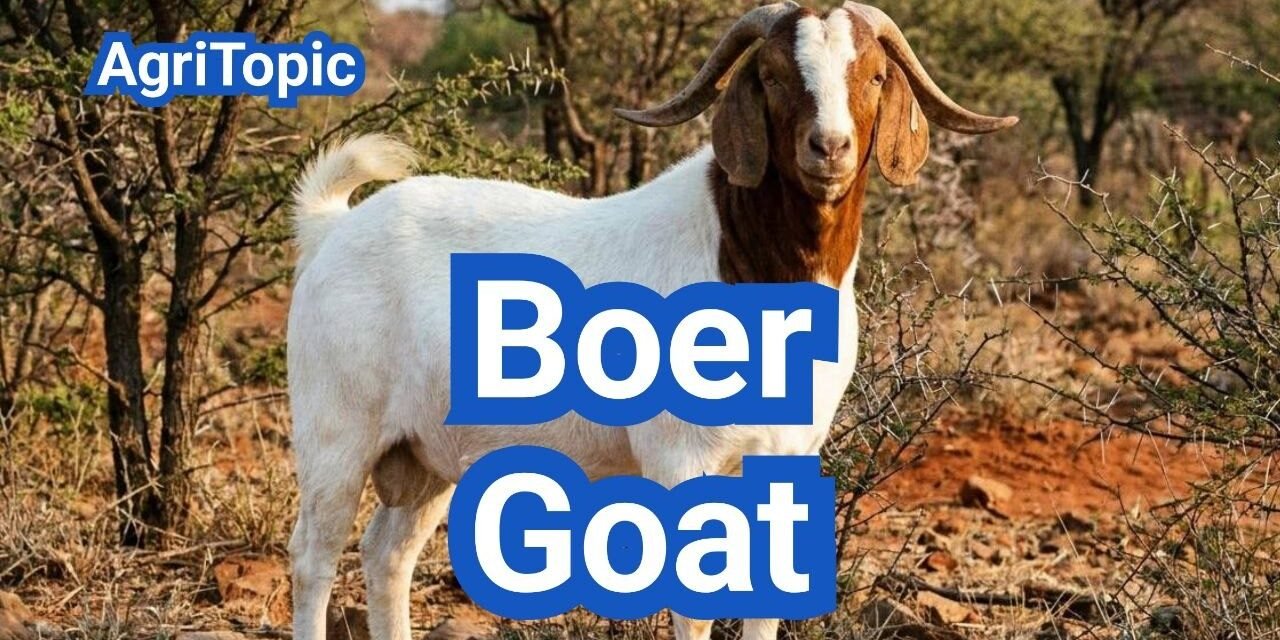
Boer Goat is a large domestic goat breed developed in South Africa for meat production. It is recognized for a deep, muscular body, long drooping ears, and strong hindquarters. A white body with a reddish-brown head is common, but coat color alone does not establish pedigree or registration status.
Quick Answer: For a U.S. farm, choose Boer goats for useful muscling and growth potential, then evaluate individual animals for sound feet, manageable behavior, productive relatives, and documented health. Secure fencing, suitable forage, parasite monitoring, and a confirmed market are the foundations of successful raising. Registration and impressive appearance cannot replace those checks.
A Boer goat can look impressive in a sale photograph and still be a poor match for your farm. The practical questions are whether the animal can stay productive under your conditions, whether you can manage its size and behavior, and whether its offspring fit the market you plan to serve.
This guide connects breed traits with everyday decisions: understanding temperament, checking registration categories, inspecting breeding stock, preparing facilities, and managing feeding through kidding and weaning. It also explains how to measure growth and compare costs so that herd decisions rest on records rather than promotional claims.
Key Takeaways
- Mature breeding weight and the best weight for selling a market kid are different measurements.
- Temperament varies between animals; observe handling behavior before buying.
- Use current ABGA documents to check registration categories and breed standards.
- Match feeding to growth, pregnancy, lactation, and body condition instead of giving every goat the same ration.
- Track pounds of kid weaned per doe exposed to breeding, alongside health costs and sale returns.
Boer Goat Facts: Traits, Size, and Meat Use
The most useful Boer goat facts connect the breed’s appearance with the work expected of it. A broad chest, substantial hindquarters, and a deep body help explain its place in meat production, while feet, mouth, reproductive soundness, and actual growth determine whether an individual animal is useful on a particular farm.
| Feature | Typical breed description | Practical meaning |
|---|---|---|
| Origin | South Africa | Developed through selection for meat production. |
| Primary use | Meat production and meat-oriented breeding | Used in registered herds and commercial crossbreeding systems. |
| Common appearance | White body with a red or brown head, pendulous ears, and a muscular frame | Useful for recognizing breed type, but insufficient for verifying ancestry. |
| Mature doe weight | Approximately 190–230 pounds in ABGA’s breed description | An adult breeding-animal reference, not a target for growing market kids. |
| Mature buck weight | Approximately 200–340 pounds in ABGA’s breed description | Handling facilities must accommodate a large, powerful adult. |
| Coat variations | Traditional, solid, painted, and dappled appearances occur | Color does not establish growth, fertility, or parasite resilience. |
The weight ranges above come from the American Boer Goat Association’s breed description. Individual animals vary with genetics, age, nutrition, and management, so these figures should guide expectations rather than encourage overfeeding to reach a particular number.
Origin and growth potential
Modern Boer development began in South Africa in the early 1900s, and the breed entered the United States from Australia and New Zealand in 1993. Ohio State describes growth performance around 0.3–0.4 pound per day, with higher gains recorded in exceptional animals under feedlot conditions. Those figures provide context, not a promise for every pasture-raised kid, as explained in its meat goat production guide.
Adult size is different from market readiness
A mature breeding buck may weigh several times as much as a kid ready for a particular buyer. Trying to grow every market animal toward adult breed size can increase feed costs, extend the production cycle, and move the animal into a less favorable weight category.
Set sale targets around the buyer’s preferred weight, condition, sex, and delivery date. Then use repeated weighing to determine whether the herd can reach those targets economically. A heavy animal is not automatically a more profitable animal.
What the breed contributes to meat production
Boer genetics are commonly selected to add meat-type conformation and useful growth to a herd. Their value may come through a registered breeding program, commercial market kids, or the use of a Boer sire over productive crossbred females.
Keep those purposes separate when evaluating animals. A breeding doe must repeatedly produce and raise healthy offspring, while a market kid is evaluated for the specifications of its sale channel. Attractive breed type can support both goals, but it cannot substitute for the relevant performance records.
Boer Goat Temperament: Personality and Handling

Boer goat personality is often described as relatively calm and people-tolerant. That is a breed tendency, not a guarantee: genetics, early handling, previous experiences, sex, and the management environment all influence how an individual goat behaves.
Observe behavior before buying
Watch a prospective purchase before the seller catches it. Notice whether it settles after a disturbance, follows the group through a gate, competes excessively at a feeder, or repeatedly challenges people. An animal that is difficult to manage in familiar surroundings may create substantial extra work after transport.
- Ask the seller to demonstrate ordinary catching and handling.
- Look for recovery after mild disturbance, rather than expecting complete stillness.
- Check whether smaller or quieter goats can reach feed and water.
- Consider the experience and physical capabilities of the people who will provide daily care.
A quiet animal still needs suitable restraint for hoof care, examinations, and treatment. Gates, a small sorting pen, and an appropriate handling stand or chute make routine work more predictable than trying to overpower a large goat in an open pasture.
Does, bucks, and wethers have different management needs
A doe may become more protective around kidding, while an intact buck can become more difficult to handle during breeding activity. Adult bucks also require secure separation when breeding is not intended. Their size and behavior deserve consideration before a beginner purchases one for a very small herd.
A wether is a castrated male. A well-socialized wether may suit a companion role, but it still needs appropriate nutrition, hoof care, shelter, and compatible goat company. Castration does not remove the need to evaluate temperament or provide sound management.
Companionship and long-term care
Goats are social animals, so plan for compatible companions and enough feeder space to reduce competition. Stable groups and calm, consistent handling help animals become familiar with the daily routine. Avoid encouraging pushing or head-butting during play, particularly in young animals that will become much larger.
For a companion animal, consider the full ownership period. The City of Roswell’s Boer goat profile gives a lifespan of about 8–12 years. That is a general expectation rather than a guarantee, but it makes clear that the purchase involves a continuing commitment to facilities, feed, and veterinary care.
Boer Goat Breed Standards and a Buying Checklist

Boer goat breed standards describe the association’s ideal animal and the faults relevant to its evaluation system. Commercial selection adds another question: can this goat remain functional and productive under the conditions in which you will keep it?
Evaluate structure and function together
The ABGA breed standards address the head and mouth, body, feet and legs, coverings, reproductive organs, and other features. Use the current document for the animal’s class, especially when buying for showing or registered breeding.
| Inspection area | What to evaluate | Why it matters on the farm |
|---|---|---|
| Mouth and teeth | Jaw alignment, dental condition, and ability to eat normally | A goat must harvest and chew enough feed to remain productive. |
| Feet and legs | Comfortable movement, sound support, and absence of persistent lameness | Mobility affects grazing, breeding, and access to water. |
| Body condition | Condition appropriate to age and production stage | Excess fat can obscure useful assessment; unexplained thinness needs investigation. |
| Doe udder and teats | Functional structure, accessible teats, and previous nursing history | Kids must be able to nurse effectively. |
| Buck reproductive soundness | Veterinary breeding evaluation, sound movement, and relevant records | A visually impressive sire may still have fertility problems. |
| General health | Appetite, breathing, skin, coat, manure, and unexplained swellings | Appearance alone cannot rule out infectious disease or chronic problems. |
Fullblood, purebred, and percentage categories
Registration terminology should be checked against current rules rather than an older sales description. In the ABGA rules document updated July 24, 2026, the principal breeding-stock categories use the following ancestry thresholds. Parentage, documentation, and other registration requirements also apply.
| ABGA category | Boer ancestry threshold in the current rules |
|---|---|
| Fullblood | 99.5% or higher, with the qualifying ancestry specified by the rules |
| American Purebred doe | At least 93.75% and less than 99.5% |
| American Purebred buck | At least 96.875% and less than 99.5% |
| American Percentage doe | At least 25% and less than 93.75% |
| American Percentage buck | At least 25% and less than 96.875% |
These are registry classifications, and a percentage claim alone does not complete registration. Verify the certificate, animal identification, ownership, and transfer arrangements against the current ABGA Rules and Regulations before paying a registered-stock premium.
Ask for evidence beyond the certificate
Request kidding history, kid survival, comparable weaning weights, treatments, and reasons related animals were removed from the herd. For a young animal without its own production record, the dam’s history and the performance of close relatives can provide useful context.
Observe the source herd as well as the individual purchase. The Purdue guide to starting a meat goat operation emphasizes health, temperament, structural soundness, and productive traits when selecting stock. Buying from a documented management system helps you understand what support the animal has needed.
Finally, treat color as a preference unless your intended buyers demonstrably pay for it. A dappled coat, a particular head marking, or a fashionable pedigree should not outweigh chronic foot problems, poor reproductive history, or behavior that your facilities cannot safely accommodate.
Choosing a Boer Herd or a Crossbreeding System

Decide what the herd will produce before deciding how much Boer ancestry every animal needs. Selling registered replacements, producing commercial kids, and keeping a few companion goats involve different purchase criteria, records, and spending priorities.
| Production goal | Possible approach | Evidence to prioritize |
|---|---|---|
| Commercial market kids | A selected Boer sire over productive, locally adapted females | Kid survival, growth, sale suitability, and total cost per doe |
| Registered breeding stock | A documented breeding program serving a defined buyer group | Registration eligibility, structural soundness, fertility, and repeatable performance |
| Retained replacement females | A planned purebred or crossbred maternal system | Mothering, udder function, longevity, feed requirements, and health history |
| Companion ownership | Compatible animals selected primarily for manageability | Temperament, adult size, facilities, and long-term care capacity |
Terminal crossing and replacement breeding
In a terminal system, the designated crossbred offspring are intended for sale rather than retention as breeding replacements. A farm may use a Boer sire to produce market kids while obtaining or maintaining maternal replacements through a separate plan.
If daughters will remain in the herd, evaluate more than their early growth. Their future performance will depend on fertility, milk supply, feet, parasite response, and ability to maintain condition through repeated production cycles.
What Boer–Kiko and Boer–Spanish comparisons can tell you
Kiko and Spanish genetics are often considered where maternal performance and pasture adaptation are priorities. A Tennessee State University study found lower stayability and cumulative kid production in its Boer does than in Kiko and Spanish does under humid subtropical management. The findings apply to the studied population and conditions, and demonstrate the value of evaluating lifetime output rather than assuming breed reputation predicts local performance.
Use the Tennessee State breed-comparison research as a reason to ask better selection questions. Crossbreeding can combine complementary traits, but neither a breed label nor a cross guarantees low treatment costs or superior survival on every farm.
Where Nubian crosses fit
A Boer sire used on suitable dairy-influenced females can produce market kids from a different maternal base. When considering Nubian goats or Nubian-influenced replacements, evaluate actual milk performance, kid growth, udder function, and feed costs. The maternal breed’s reputation does not establish the performance of every crossbred daughter.
Preparing Your Farm Before the Goats Arrive

A workable farm setup lets you contain, inspect, separate, feed, and move the animals without rebuilding the system during an emergency. Complete the essential facilities before arrival, then begin with a group small enough to manage consistently through your first production cycle.
Fencing, shelter, and handling space
Inspect perimeter fencing for gaps, loose wires, insecure gates, and openings that could trap a horned head. Suitable woven wire, properly designed electric fencing, or a combination may be used, but the entire system must suit the animals and local predator pressure.
Dry resting space, ventilation, weather protection, and a handling area are more useful than an elaborate building that remains muddy or difficult to clean. Include separate space for new arrivals, sick animals, breeding bucks, and does needing attention around kidding. The NC State small-farm sheep and goat guide explains the relationship between housing, fencing, working facilities, and farm planning.
Plan how hay, water, and minerals will reach every group. A feeder that works for quiet adults may allow dominant animals to exclude smaller goats. Position gates and equipment so routine tasks can be completed without repeatedly moving unrelated groups through one another.
How much land is enough?
There is no reliable nationwide answer expressed as a fixed number of Boer goats per acre. Carrying capacity changes with usable forage, rainfall, soil, plant maturity, season, and the amount of feed brought onto the property.
Estimate the forage available during the most limiting part of the year, not only during spring growth. Set aside a plan for drought, winter feeding, and paddock recovery. Small acreage can support goats with substantial purchased feed, but that changes both the manure-management burden and the enterprise budget.
Walk the property before turnout. Identify unsuitable plants and other hazards, protect desirable young trees where necessary, and prevent repeated damage around wet gateways and water points. Browsing ability does not mean every plant on the property is safe or nutritionally adequate.
Raising Boer goats alongside cattle
Goats and cattle can use different parts of a varied plant community, which may improve forage utilization. However, their combined demand must still fit the land, and goats require suitable fencing, water access, and species-appropriate feeding arrangements. Mississippi State discusses these opportunities in its mixed-species grazing publication.
Co-grazing does not replace parasite monitoring or a stocking plan. If sheep are also present, mineral access requires particular attention because sheep and goats do not have identical copper requirements.
Adjust priorities to your location
| Farm conditions | Planning priorities |
|---|---|
| Warm, humid conditions | Drainage, parasite surveillance, forage height, and avoiding excessive stocking |
| Hot or drought-prone conditions | Reliable water, shade, forage reserves, and early decisions about reducing feed demand |
| Cold or wet winter conditions | Dry bedding, wind protection, dependable water access, and adequate winter forage |
Identification and movement arrangements
Arrange animal identification and recordkeeping before purchases and sales begin. Official identification requirements depend on the animal and movement involved; a farm nickname or ordinary management tag may not meet the applicable requirement. Start with the USDA APHIS sheep and goat identification guidance.
Before interstate transport, confirm destination-state entry rules and any required certificate of veterinary inspection or other documentation with the relevant authorities and veterinarian. The APHIS interstate movement reference provides the federal framework, while states may impose additional conditions.
For a broader setup sequence, use our goat farming guide for beginners alongside a property-specific plan.
Feeding Boer Goats by Age and Production Stage
Start with the forage the farm can reliably provide, then determine which animals need additional nutrients. A growing kid, a dry mature doe, and a doe nursing multiple kids should not automatically receive identical amounts of concentrate.
Build the ration around usable forage
Forage quality changes as plants mature, and an apparently full hay feeder does not prove that nutrient needs are being met. Use forage analysis, body condition, feed intake, and growth records together. The NCAT guide to ruminant nutrition, hosted by USDA NRCS explains how forage supply and production stage affect supplementation decisions.
| Animal group | Main feeding objective | Management check |
|---|---|---|
| Dry mature does | Maintain suitable condition without unnecessary weight gain | Check forage adequacy before adding grain. |
| Growing kids | Support steady growth and a healthy transition toward solid feed | Track weight and confirm that smaller kids can reach feed. |
| Late-pregnant does | Meet increasing demands while maintaining appropriate condition | Review forage quality, litter information when available, and access to feed. |
| Lactating does | Support milk production and prevent excessive condition loss | Evaluate the doe and the growth of the kids together. |
| Breeding bucks | Enter breeding in suitable condition and recover afterward | Adjust feeding to actual workload and condition. |
Introduce ration changes gradually. Sudden increases in concentrate can disrupt digestion, and generous feeding does not compensate for disease, poor teeth, or competition at the feeder. Divide groups by nutritional need where the facilities allow.
Record how much supplement is offered and how quickly it is consumed. If performance remains poor, investigate the reason before simply increasing the ration. Feed quality, parasite problems, illness, and access can produce similar visible outcomes.
Water and minerals
Provide continuous access to clean water and inspect supplies during both hot and freezing weather. A trough can appear adequate while being difficult for young kids to reach, contaminated by manure, or monopolized by a dominant animal.
Use a balanced loose mineral intended for goats and suited to local conditions. A plain salt block is not a complete substitute. Mississippi State’s guide to goat mineral requirements explains why product composition, intake, forage supply, and mineral interactions all matter.
Keep minerals dry and monitor consumption against label guidance. Additional copper, selenium, or other supplements should address an identified need; adding multiple products without reviewing their combined contribution can create an imbalance.
Plan for seasonal shortages
Budget for the period when pasture provides the least useful feed. Estimate stored-forage needs before the shortage develops, and consider storage and feeding losses. Purchased hay that is repeatedly spoiled or trampled costs more per pound actually consumed than its purchase price suggests.
Move animals according to forage availability and recovery, while monitoring animal condition. Rotation supports pasture management, but a fixed movement calendar cannot guarantee adequate nutrition or eliminate parasite exposure.
Boer Goat Health: Parasites, Hooves, and Prevention

A useful herd health plan identifies what to observe, when to investigate, and how to record action. It should cover new arrivals, vaccinations, internal parasites, kid health, feet, reproductive problems, and treatment records, with decisions adapted to the farm and its veterinarian.
The University of Arkansas herd health guide emphasizes daily observation and individual records. Learning each group’s normal appetite, movement, and behavior makes changes easier to recognize.
Use targeted parasite management
FAMACHA evaluates lower-eyelid color as an indicator of anemia, particularly where barber-pole worm is important. It does not identify every parasite or explain every cause of poor growth. Obtain training and use it alongside other observations and appropriate testing, as described by the American Consortium for Small Ruminant Parasite Control.
A parasite program may combine fecal testing, clinical assessment, selective treatment, and checks that treatment worked. Repeatedly deworming every goat on a fixed calendar can increase selection for drug resistance. Product choice, accurate dosing, and follow-up should be discussed with the herd veterinarian.
Reduce unnecessary exposure by managing stocking pressure, keeping feed off contaminated ground, and avoiding repeated grazing of depleted pasture. Rotation is one part of the program; larvae can remain after animals leave, depending on weather and pasture conditions.
Give young kids a separate health focus
Coccidiosis deserves particular attention around crowding, dietary changes, and weaning. Clean feeders, dry resting areas, and appropriate grouping help reduce exposure. Ordinary worm treatments should not be assumed to control coccidia, and diarrhea needs assessment rather than automatic treatment for a single presumed cause.
Watch for kids that repeatedly fall behind their group. Check nursing or feed access, growth records, body condition, and signs of illness. Early investigation is more useful than waiting until the difference becomes severe.
Hooves, vaccination, and new arrivals
Inspect hooves regularly and trim when needed for the individual animal and terrain. A universal eight-week schedule may be too frequent for some goats and inadequate for others. Persistent lameness warrants investigation rather than repeated trimming alone.
Plan vaccination with the veterinarian, including appropriate protection against clostridial diseases and tetanus. Keep records of the product, animal identification, date, and any required follow-up. For medicines, record the applicable withdrawal period before sale or slaughter.
Keep purchased animals separate while their health history, examinations, testing needs, and parasite status are evaluated. Quarantine should have its own feeding and watering arrangements; a pen that permits immediate mixing defeats its purpose.
Recognize situations requiring prompt help
- Severe weakness, collapse, or very pale eyelids
- Difficulty breathing or marked abdominal swelling
- Repeated straining with little or no urine
- A kid that cannot stand, nurse, or maintain normal activity
- A difficult birth, abnormal presentation, or labor that is not progressing normally
Agree on an emergency contact plan before kidding season and keep transport or examination arrangements practical. Knowing who to call is part of routine herd preparation.
Breeding, Kidding, and Weaning: A Practical Timeline
Plan breeding backward from the desired kidding period, available forage, labor, and intended sale date. Goats commonly cycle at approximately 20–21-day intervals, and gestation is typically around 148–152 days. These figures help with planning, but individual dates vary, as outlined in Mississippi State’s meat goat management guidance.
Prepare both the buck and the does
Evaluate a buck well before turnout. North Dakota State recommends reproductive preparation and breeding soundness assessment six to eight weeks before breeding, allowing time to address problems or arrange another sire. Its ram and buck management guide covers body condition, nutrition, structural soundness, and fertility assessment.
Select breeding does for adequate development, suitable condition, and functional reproductive history. Puberty alone does not establish that a young female is ready for the demands of pregnancy and lactation. Keep unintended matings from occurring while young stock is still developing.
| Stage | Priority actions | Useful records |
|---|---|---|
| Before breeding | Assess condition, feet, reproductive soundness, and feed supply. | Animals selected, examinations, and planned mating groups |
| During breeding | Use a defined breeding period and observe activity or returns to heat. | Sire exposure dates and observed services |
| During pregnancy | Review condition and adjust grouping and feeding as needed. | Pregnancy findings and expected kidding windows |
| At kidding | Observe progress, support clean conditions, and confirm prompt nursing. | Birth date, litter size, assistance, and kid identification |
| Before weaning | Assess solid-feed intake, growth, health, and the doe’s condition. | Weights, treatments, and weaning decisions |
Use a calendar tailored to your farm rather than copying another state’s month-by-month schedule unchanged. The University of Arkansas meat goat production calendar provides a framework for connecting seasonal tasks with records and marketing plans.
Make the first hours after birth count
Check that newborn kids are breathing, drying, and obtaining colostrum promptly. Confirm that the doe accepts each kid and that the teats can be used effectively. Multiples deserve individual attention because seeing one kid nurse does not confirm that all littermates have received enough.
- Prepare a clean, dry area and basic kidding supplies in advance.
- Identify and weigh kids consistently.
- Record difficult births and any assistance.
- Maintain an agreed backup-colostrum plan.
- Seek veterinary assistance when a doe or kid is not progressing normally.
Wean according to readiness and conditions
Weaning decisions should consider age, feed intake, weight, health, and the condition of the doe. Prepare kids for the feed and facilities they will use afterward, and avoid combining several major stresses unnecessarily.
Inspect fences before separation and watch for digestive problems, respiratory signs, and reduced intake afterward. Check the doe’s udder and body condition as well. The Kentucky State University weaning manual explains why preparation must address both kids and dams.
An extended breeding season creates scheduling options, but more frequent kidding also increases nutritional and management demands. Establish reliable conception, kid survival, weaning performance, and doe recovery before considering a more intensive reproductive schedule.
Measuring Growth and Doe Productivity
Useful records show whether the herd is meeting its own goals. Record enough detail to compare animals fairly, including age, sex, litter size, rearing conditions, and treatments. A larger raw weight can reflect an older animal or different feeding rather than better genetics.
Calculate average daily gain
Average daily gain = weight gained ÷ days between weighings. For an illustrative example, a kid that increases from 52 to 64 pounds in 30 days gains 12 pounds, or 0.40 pound per day.
This calculation is a description of what happened during that interval. Use comparable weighing conditions and repeat the measurement to see whether progress continues. A brief change in gut fill should not be mistaken for a lasting improvement in growth.
Measure output per doe exposed to breeding
Pounds weaned per doe exposed = total kid weight at weaning ÷ number of does exposed to breeding. Including all exposed does captures the effect of animals that failed to conceive, lost kids, or did not raise a kid to weaning.
For example, if 20 exposed does produce a total of 1,500 pounds of weaned kids, the herd produces 75 pounds per doe exposed. Dividing only by the does that successfully weaned kids would hide part of the reproductive loss.
| Measure | Question it helps answer |
|---|---|
| Kids weaned per doe exposed | How effectively does the herd convert breeding opportunities into surviving kids? |
| Pounds weaned per doe exposed | How much saleable output is produced by the breeding herd? |
| Treatments by animal | Which animals repeatedly require extra intervention? |
| Doe condition at breeding and weaning | Can females recover and remain productive under the feeding system? |
| Feed and health costs per saleable kid | Does increased output justify the additional expense? |
Interpret records together. A fast-growing kid from a doe that repeatedly needs expensive intervention may not represent the best replacement choice. Likewise, a modest individual growth rate may be acceptable when survival, reproductive output, and costs support a better whole-herd result.
A notebook or spreadsheet can support these decisions. Electronic identification and automated weighing become useful when they solve a real recordkeeping problem; purchasing technology is not a substitute for consistent measurement.
Boer Goat Prices and the Cost of Raising a Herd

A meaningful Boer goat price must identify what is being sold. Commercial kids, breeding does, proven sires, show prospects, and companion animals are different products. Age, health documentation, registration, reproductive status, location, and sale terms all affect the comparison.
Separate market-animal value from breeding-stock value
For commercial goats, consult recent reports for the relevant weight class, sex, grade, and region. The USDA Agricultural Marketing Service goat reports provide a starting point for checking actual markets. Read the units carefully: reports may quote prices per hundredweight or per head.
Illustrative calculation: At an assumed price of $300 per hundredweight, a 75-pound goat has a gross value of $225 before commission, transport, and other deductions. This is an arithmetic example, not a current market quotation.
For breeding stock, ask what supports the premium. Relevant evidence may include reproductive performance, offspring records, registration eligibility, structural quality, and the seller’s documented management. A high asking price or unusual coat pattern does not establish that the purchase will improve your herd.
Account for the full cost of ownership
Before purchasing stock, list the resources the enterprise will use and assign costs to them. Include existing equipment and your own time where they are attributable to the goats. The Purdue small-scale goat enterprise budget provides a structure for evaluating operating expenses and investment requirements.
- Animals: breeding stock, replacements, breeding services, and expected losses.
- Facilities: fencing, gates, shelter, handling space, water systems, and repairs.
- Feed: pasture costs, hay, supplements, minerals, storage, and waste.
- Health and management: veterinary services, testing, medicines, identification, and supplies.
- Marketing: hauling, commissions, selling expenses, and processing where applicable.
- Ownership and labor: depreciation, capital costs, insurance, and operator or hired time.
Calculate returns using the number of animals realistically expected to reach sale, not the number you hope will be born. A budget that assumes every doe conceives and every kid survives can conceal the effect of ordinary production losses.
A documented planning example
The University of Missouri’s 2026 meat goat planning budget models a 50-doe, spring-kidding enterprise with a 170% live kid crop per doe exposed and 160% raised to sale weight. Its stated costs and returns are useful for understanding a budget, but are not national averages or Boer-specific guarantees.
| Budget measure | Modeled dollars per doe |
|---|---|
| Total income | $441.68 |
| Total operating costs | $306.32 |
| Total ownership costs | $91.91 |
| Total costs | $398.23 |
| Income over total costs | $43.45 |
These results depend on the model’s feed, labor, sale-weight, price, and other assumptions. The difference between operating margin and return over total costs shows why excluding ownership costs can make an enterprise appear more profitable than it is.
Test the decisions that could change the result
Run a second budget with lower sale prices, higher purchased-feed costs, or fewer kids reaching sale. Then examine whether the herd can still cover its commitments. This exercise helps identify whether forage supply, survival, marketing, or initial investment is the largest constraint.
Before keeping kids longer, compare the expected additional sale value with added feed, health, labor, and risk. More days on feed can improve weight while reducing margin if the next weight category pays less per pound.
For a new commercial enterprise, connect these calculations with a defined buyer and production plan. Our guide to starting a meat goat operation covers the broader setup decisions that accompany breed selection.
A First-Month Checklist for New Owners

Use the first month to establish dependable routines and baseline records. The following sequence is an organizational checklist; quarantine length, testing, treatment, and the timing of herd introduction should follow the plan agreed with your veterinarian.
| Period | Priority tasks | What to record |
|---|---|---|
| Before arrival | Test fences, prepare separate accommodation, obtain feed history, and arrange health and identification requirements. | Seller details, animal IDs, documents, and purchase terms |
| Arrival and initial observation | Provide water and familiar feed where practical; observe appetite, movement, manure, and behavior. | Baseline weight or condition, observations, and any concerns |
| Following weeks | Complete the agreed health evaluation, make gradual feeding adjustments, and check feeder access and facilities. | Tests, treatments, feed changes, and follow-up findings |
| Before mixing or breeding | Review health findings and compatibility; confirm that facilities and management are ready for the next stage. | Introduction or breeding decisions and reasons |
Common early mistakes include buying more animals than the facilities can separate, changing several feeds at once, treating poor growth without investigating its cause, and assuming registration replaces health records. Correct those weaknesses before expanding the herd.
Boer Goat FAQs
What is so special about Boer goats?
Boer goats are recognized for their meat-oriented build, useful growth potential, and established role in commercial crossbreeding and registered breeding programs. Their practical advantage depends on selecting animals that perform under the farm’s conditions, then supporting them with suitable feeding, health management, and a clear production goal.
How much does a Boer goat cost?
There is no single U.S. price for a Boer goat. Commercial kids may be valued by weight and grade, while breeding and show animals are priced using different criteria. Compare animals of the same age, sex, purpose, health status, and registration category, and include transport and necessary testing in the purchase budget.
Why are Boer goats so expensive?
Some Boer goats carry premiums for documented breeding performance, pedigree, show prospects, or a particular buyer market. Those premiums do not necessarily translate into better returns from commercial meat kids. Ask what measurable benefit supports the price and whether your intended market will pay for that benefit.
Is a Boer goat a good pet?
A well-socialized Boer goat can be a companion animal when its adult size, temperament, and care requirements fit the owner’s facilities. Plan for compatible goat company, secure fencing, and continuing health care. An intact breeding buck generally requires more demanding management than a suitable wether or calm doe.
Final Thought
The strongest Boer goat herd is built around animals that remain functional, raise healthy kids, and fit the farm’s resources. Start with sound selection and manageable numbers, connect feeding and breeding to a realistic market, and use records to decide what deserves to be retained. Expand when the results support it, with attention to both animal performance and the full cost of producing it.
Sources & References
- American Boer Goat Association — Characteristics and Anatomy of the Boer Goat
- American Boer Goat Association — Breed Standards
- American Boer Goat Association — Rules and Regulations
- City of Roswell — Boer Goats
- Purdue Extension — Starting a Meat Goat Operation
- Tennessee State University — Comparison of Boer, Kiko, and Spanish Does for Stayability and Cumulative Reproductive Output
- NC State Extension — Sheep and Goat Production for Small Farms in North Carolina
- Mississippi State University Extension — Grazing in Harmony: Benefits of Mixed-Species Grazing or Co-Grazing
- USDA APHIS — Sheep and Goat Identification
- USDA APHIS — Interstate Movement of Cattle, Horses, Swine, Sheep and Goats
- NCAT/ATTRA — Ruminant Nutrition for Graziers, hosted by USDA NRCS
- Mississippi State University Extension — Mineral Requirements and Impact on Dairy and Meat Goat Production
- University of Arkansas Extension — Herd Health Program for Meat Goats
- American Consortium for Small Ruminant Parasite Control — Targeted Selective Treatment and FAMACHA
- Mississippi State University Extension — Meat Goat Management
- North Dakota State University Extension — Managing Rams and Bucks for Reproductive Success
- University of Arkansas Extension — Meat Goat Production Calendar
- Kentucky State University Cooperative Extension — Goat Management: Weaning
- USDA Agricultural Marketing Service — Goat Reports
- Purdue Extension — Small-Scale Livestock Enterprises: Goat Enterprise Budget